
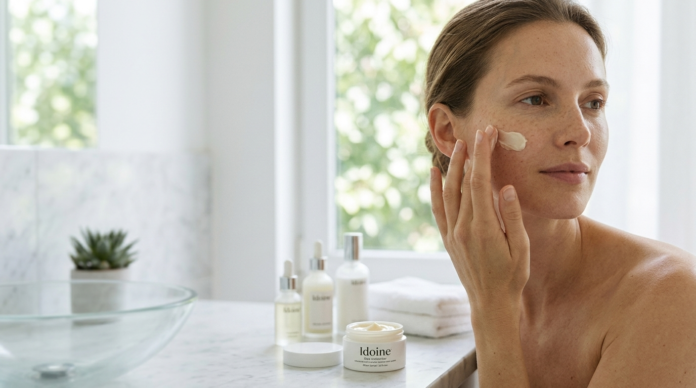
You conscientiously apply your cream every morning upon waking. An hour later, your cheeks already feel tight, and applying more at midday doesn’t change much. This scenario is more common than you might think, especially when the air gets dry and the heating is running continuously.
The first instinct is often to look for a richer cream. However, the problem is rarely inside the jar: it lies instead within your skin barrier. Here is how to recognize an exhausted skin barrier, what weakens it daily, and simple adjustments to help restore comfortable skin.
What is the skin barrier, exactly?
A wall of bricks and mortar
The skin barrier corresponds to the outermost layer of the epidermis. It is often compared to a wall: skin cells form the bricks, while lipids act as the mortar holding them together. This natural mortar is primarily composed of ceramides, cholesterol, and fatty acids.
When everything is well-organized, it limits water evaporation and keeps external aggressors at bay. When breaches appear, water escapes more easily and the skin becomes uncomfortable, regardless of how much cream you apply.
The hydrolipidic film, the front line
On top of this wall lies a thin film made of water and sebum, slightly acidic. It contributes to skin comfort and surface balance. Cleansing too aggressively can strip it away in seconds.
Dehydrated skin vs. damaged barrier: signs to watch for
Dehydrated skin lacks water, regardless of skin type: even oily skin can be affected. Often, this lack of water is merely the visible symptom of a barrier that no longer retains moisture effectively. Several signs can help you make the connection.
Tightness after cleansing: your face feels tight within minutes of showering or washing. This is often the first sign that the protective film has been over-solicited.
Moisturizer that seems to disappear: you apply your cream, but discomfort returns within an hour or two. The skin absorbs the product without managing to hold on to the hydration you provide.
Unusual tingling sensations: a product you have tolerated for months suddenly stings or burns. A compromised surface allows irritants to penetrate more easily.
Dull complexion and more prominent fine lines: dehydration lines become accentuated by the end of the day. The complexion loses its radiance because skin lacking water reflects light poorly.
Rough, flaking patches: the area around the nose or chin flakes slightly. These small dead skin cells accumulate when surface turnover is disrupted.
What weakens your barrier daily
Over-cleansing
Highly foaming cleansers, excessively hot water, and harsh scrubbing remove more lipids than necessary. The result is felt immediately: skin that feels squeaky clean under your fingers, followed by tightness. That “squeaky clean” sensation is actually an alarm signal.
Product overload
Concentrated serums, purifying masks, and overly abrasive scrubs: combined, they can exceed what your skin can tolerate. Multiplying routine steps doesn’t guarantee better results, especially when the skin is already reactive.
Climate and indoor heating
Cold weather, wind, and dry indoor heat accelerate water evaporation from the skin’s surface. In winter, the stark contrast between freezing outdoor air and overheated interiors puts severe strain on the skin barrier. A routine that worked in July may prove insufficient by January.
To dive deeper into this topic, this guide on a damaged skin barrier explains why your face may continue feeling tight even after applying moisturizer. It helps distinguish between a simple lack of hydration and a barrier that needs extra care.
How to help tight skin regain its comfort
Good news: a damaged skin barrier usually restores its balance given time and gentleness. The goal isn’t to do more, but to do better.
Rethink your cleansing routine first
Cleansing is the step where the barrier is most vulnerable. Opt for a gentle facial cleanser that respects the hydrolipidic film, and use lukewarm rather than hot water. Afterwards, dry your face by gently patting instead of rubbing.
Moisturize on damp skin
Apply your cream within one minute after cleansing, while the skin is still slightly damp. This simple trick locks in surface moisture. At night, a richer texture can take over to support overnight recovery.
Simplify your routine for a few weeks
Pause highly active products while your skin calms down. A minimal routine consisting of a cleanser, a moisturizer, and daytime sun protection often yields better results than a heavy regimen. Reintroduce products one by one, carefully observing how your skin responds.
Improve your environment
A bedroom humidifier helps counteract dry air overnight. Keep hot showers short and protect your face from wind with a scarf during harsh cold weather. If discomfort persists despite these adjustments, consult a skincare professional.
Tight skin isn’t inevitable
Skin that feels tight despite applying moisturizer doesn’t necessarily need another product. It’s asking for gentle care to restore its barrier: milder cleansing, timely hydration, and a bit of patience. Within a few weeks, most skin regains its suppleness and comfort.
What step in your skincare routine do you suspect might be weakening your skin barrier?