
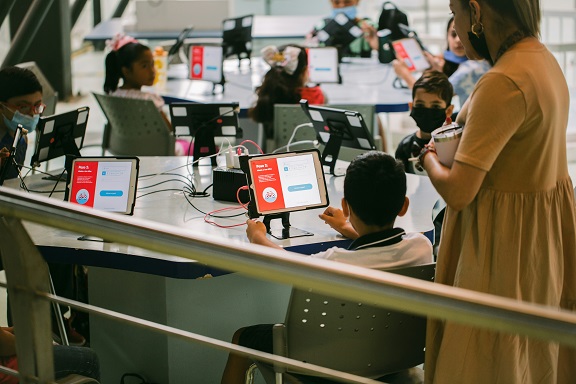
Introduction to Digital Education
Digital education, characterized by the integration of technology into learning experiences, has fundamentally altered traditional educational methods. With the emergence of the internet and digital tools, the landscape of learning has transformed, making it more accessible and inclusive. In this digital age, educational institutions are leveraging online platforms to reach a wider audience, thus breaking geographical barriers that previously limited access to quality education. One of the most significant impacts of digital education is the democratization of knowledge. Learners from diverse backgrounds can now access an extensive array of resources, courses, and interactive learning experiences directly from their devices. The internet serves as a repository of information, facilitating collaborative learning environments where students can connect, share insights, and engage with peers and educators across the globe. This level of interconnectedness enhances the educational experience, fostering a sense of community among participants.
Furthermore, digital tools such as video conferencing, Learning Management Systems (LMS), and virtual classrooms have revolutionized how lessons are delivered. Educators are now able to incorporate multimedia content, enabling a more engaging and dynamic curriculum. Tailored learning paths also arise from adaptive learning technologies, allowing students to progress according to their individual needs and pace. Consequently, this has resulted in improved educational outcomes and increased student satisfaction.
The global reach of digital education platforms has spurred an increase in lifelong learning opportunities, empowering individuals to upskill or reskill throughout their careers. The convenience of accessing educational resources at any time and from any location continues to redefine the traditional understanding of learning. In conclusion, as technology advances, the integration of digital education will likely evolve further, ensuring that it remains a critical component of the future educational framework.
Current Trends in Digital Education
Digital education has undergone significant transformation in recent years, characterized by various trends that enhance learning accessibility and personalize educational experiences. One prominent trend is the rise of online courses, with numerous platforms offering a wide array of subjects accessible to learners across the globe. These courses not only provide flexibility to students but also allow institutions to reach a broader audience, transcending geographical limitations. The democratization of education through online platforms has made it possible for individuals from diverse backgrounds to pursue knowledge at their convenience.
Another significant trend in the realm of digital education is the proliferation of educational apps designed to facilitate learning. These applications cater to various educational needs, including exam preparation, language learning, and skill development. With interactive features such as quizzes, videos, and gamified learning experiences, educational apps engage students in ways that traditional methods may not. This hands-on approach fosters deeper understanding and retention of information, making learning more appealing to a digitally inclined audience.
Adaptive learning technologies have also emerged as a key component of digital education. These systems utilize algorithms to tailor educational content and pacing to individual student needs, helping to address the varying levels of proficiency within a classroom. By leveraging user data, adaptive learning platforms can identify knowledge gaps and provide targeted resources to facilitate improvement. This personalization promotes a more effective learning journey and supports diverse learning styles.
Finally, the increasing use of artificial intelligence (AI) in learning environments presents a groundbreaking shift. AI tools are being integrated into educational platforms to enhance administrative efficiency, facilitate personalized feedback, and even support tutoring. By leveraging machine learning, AI can analyze student interactions and adapt content to optimize the learning experience. As these trends continue to shape digital education, the potential for a more inclusive and engaging educational landscape becomes increasingly apparent.
The Role of Technology in Shaping Future Learning
As we look towards the future of digital education, it is clear that technology will play an indispensable role in shaping how learning unfolds. Multiple technological innovations are poised to enhance educational experiences, making them more engaging and effective for learners. Among these innovations are virtual reality (VR) and augmented reality (AR), which are emerging as powerful tools in immersive learning environments. These technologies enable students to participate in simulated experiences that foster deeper understanding through interaction.
Virtual reality can transport learners to historical events, geographical locations, or even celestial bodies, all from the comfort of their classrooms or homes. On the other hand, augmented reality overlays digital information onto the real world, thus providing contextual learning experiences that encourage exploration and discovery. Through these modalities, students become active participants in their education, rather than passive recipients of information.
Furthermore, artificial intelligence (AI) and machine learning (ML) are set to revolutionize personalized learning. With the capability to analyze individual student performance and adapt educational content according to unique needs, AI-driven platforms can provide tailored pathways for learning. This adaptive nature ensures that students progress at their own pace, effectively addressing the diverse learning styles and requirements present in any educational setting.
In addition to AI and immersive technologies, blockchain technology promises to enhance the integrity of digital education. By providing secure and unchangeable records of academic achievements, blockchain can facilitate credentialing and verification processes. This capability will not only streamline administration tasks but also provide transparency and trust in the digital education landscape.
In conclusion, the integration of these advanced technologies into the educational framework will pave the way for a more interactive, personalized, and secure learning environment. As these tools continue to evolve, the educational experiences of students will undoubtedly be transformed, allowing them to thrive in an increasingly digital world.
The Shift Towards Personalized Learning
In recent years, the education sector has experienced a significant transformation driven by technological advancements. One of the most notable changes has been the shift towards personalized learning, which tailors educational experiences to the individual needs and preferences of students. This approach is facilitated by data analytics, enabling educators to create customized learning paths that enhance student engagement and outcomes.
Data analytics plays a crucial role in understanding the strengths and weaknesses of each learner. By collecting and analyzing various data points—from assessment scores to engagement metrics—educators can gain insights into how each student learns best. This information allows them to refine their teaching methods and modify the curriculum to suit different learning styles. As a result, students are more likely to remain motivated and engaged, as the material resonates more closely with their personal interests and experiences.
Moreover, technology platforms can adapt content in real-time, providing immediate feedback and support to students as they progress through their learning journeys. This instant adaptability significantly enhances the educational experience, ensuring that learners are not left behind if they struggle with certain concepts. Whether through interactive quizzes, educational games, or personalized study plans, the focus on individualized education fosters a more relevant and effective learning environment.
The implications of this shift towards personalized learning are profound. It allows for a more inclusive approach to education, accommodating diverse backgrounds and learning capabilities. For educators, it promises the ability to deliver higher-quality instruction, tailored to meet the unique demands of each learner. In this way, personalized learning, supported by advanced technologies and data insights, is becoming increasingly integral to the future of digital education.
Challenges and Barriers to Digital Education
As digital education continues to reshape how knowledge is acquired, several challenges and barriers must be addressed to ensure its effectiveness and accessibility for all learners. One significant concern is digital equity, which refers to the fair distribution of digital resources and opportunities across diverse populations. This disparity can lead to unequal access to digital education, particularly for underprivileged communities who may lack the necessary tools or skills.
Internet access is another critical barrier affecting the reach of digital education. While many regions enjoy reliable connectivity, a substantial portion of the population—especially in rural and less developed areas—remains underserved. The absence of high-speed internet can prevent students from engaging fully with digital content, participating in interactive activities, or leveraging online resources, thus exacerbating existing educational inequalities.
The digital divide further complicates the landscape of digital education. This term describes the gap between those who have easy access to digital technologies and those who do not, which can stem from socio-economic differences, geographical location, age, or educational background. As digital education expands, it is essential to consider how this divide may hinder efforts to equip all learners with the skills needed in an increasingly digital world.
Additionally, concerns regarding excessive screen time can affect students’ physical and mental health. Prolonged use of digital devices can lead to issues such as eye strain, decreased physical activity, and social isolation, which may counteract the benefits of a digitally-enhanced education. As a result, blending traditional teaching methods with digital approaches remains vital in achieving a balanced learning environment.
Addressing these challenges requires a collaborative effort among educators, policymakers, and technology providers to create an inclusive, equitable, and effective digital education landscape that serves all learners adequately.
The Impact of COVID-19 on Digital Education Trends
The COVID-19 pandemic has fundamentally transformed the landscape of education, compelling institutions, educators, and students to adopt digital education at an unprecedented pace. With the onset of global lockdowns, traditional classroom settings were rendered impractical, necessitating a swift transition to online learning environments. Educational institutions, often lacking in prior digital infrastructure, were pressured to leverage technology to ensure continuity of learning.
Initially, the shift to digital education presented numerous challenges, including technology access disparities, the need for quick adaptation among educators, and concerns regarding the effectiveness of online learning methodologies. However, these immediate struggles paved the way for an accelerated adoption of digital tools such as video conferencing platforms, learning management systems, and online resource repositories. As a result, the educational community was able to develop innovative approaches to deliver curricula remotely.
Beyond the immediate effects during the pandemic, the long-term implications for digital education trends are profound. Educational institutions are increasingly investing in hybrid models that combine traditional and online learning, offering increased flexibility for both instructors and learners. This convergence reflects a growing recognition of the need for adaptable educational frameworks that can respond to future disruptions, whether due to public health concerns or technological advancements.
On a broader scale, the shift toward digital education has democratized access to knowledge, enabling learners from diverse backgrounds to benefit from high-quality educational resources irrespective of geographical boundaries. As various stakeholders continue to explore new teaching strategies and curriculum enhancements, it is evident that the pandemic has not only accelerated the digital transformation of education but has also catalyzed a reevaluation of the purpose and delivery of education itself.
The Importance of Lifelong Learning in a Digital World
In today’s rapidly evolving society, the concept of lifelong learning has emerged as a crucial component of personal and professional development. The advancement of technology has accelerated the need for continuous education, urging individuals to adapt to new skills and knowledge throughout their lives. As industries evolve and job markets become increasingly competitive, the ability to learn continuously is essential for staying relevant.
Digital education platforms have significantly contributed to the facilitation of lifelong learning, offering a wide array of resources that engage learners at various stages of their education. The versatility of online learning environments allows individuals to pursue courses of interest at their convenience, accommodating various learning styles and schedules. With the proliferation of Massive Open Online Courses (MOOCs), webinars, and e-books, learners are afforded greater access to information than ever before. This democratization of education enables anyone, regardless of their geographical location, to engage in courses that enhance their skills and bolster their careers.
Moreover, technological advancements, such as artificial intelligence and machine learning, have not only transformed traditional education but have also introduced personalized learning experiences. These innovations allow learners to identify their strengths and weaknesses and to pursue targeted educational paths, thereby optimizing the learning process. In this digital age, learning is no longer confined to the walls of classrooms; instead, it is an ongoing journey that spans across varying platforms and formats.
In conclusion, the significance of lifelong learning in the context of digital education cannot be overstated. As technological advancements continue to reshape industries and influence job requirements, the ability to adapt through continuous education will serve as a vital asset for individuals. Engaging with digital platforms can empower learners to remain competitive and informed in an ever-changing landscape, ensuring lifelong success in their professional endeavors.
Future Predictions for Digital Education
The landscape of digital education is poised for significant transformation, driven by advancements in technology and changing societal needs. One major prediction for the future is the continued integration of artificial intelligence (AI) into education platforms. AI will enable personalized learning experiences that cater to individual student needs, thereby enhancing engagement and improving educational outcomes. This level of customization may revolutionize traditional approaches to teaching, with algorithms adapting course content in real-time based on student performance and learning styles.
Another anticipated development is the rise of immersive learning environments through virtual and augmented reality (VR/AR). These technologies promise to create engaging, interactive experiences that can simulate real-world situations, making abstract concepts easier to understand and increasing retention. For instance, medical students could practice surgeries in a risk-free virtual setting, while history students might explore ancient civilizations through immersive simulations.
The nature of classroom interactions is also expected to evolve. Hybrid learning models that combine in-person and online education are likely to become more common. This model not only accommodates diverse learning preferences but also increases accessibility for students from various backgrounds. Additionally, as the global workforce continuously evolves, educational institutions may collaborate with industries to develop competency-based programs that align with real-world job market demands.
Moreover, the incorporation of blockchain technology could facilitate more secure and transparent systems for assessing qualifications, enabling more efficient credentialing processes. As institutions embrace digital education, we can expect a growing emphasis on data privacy and cybersecurity measures to protect student information.
In conclusion, the future of digital education promises to be innovative and inclusive, with technology playing a pivotal role in reshaping educational frameworks. As these predictions materialize, continuous adaptation will be necessary to meet the needs of learners and educators in an increasingly digital world.
Conclusion and Call to Action
As we have explored throughout this post, the landscape of education is undergoing a significant transformation driven by technological advancements. The integration of technology into educational methodologies has ushered in innovative formats of learning, such as online courses, virtual classrooms, and interactive resources that cater to various learning styles. This evolution not only enhances accessibility but also encourages lifelong learning by making education more adaptable and relevant to today’s demands.
The emphasis on digital education tools has proven to be vital, especially in the wake of recent global events that required a rapid shift to remote learning environments. Educators, students, and institutions have seen firsthand the benefits of embracing digital platforms, which include increased engagement, flexibility, and the ability to track and personalize learning experiences. Indeed, the future of digital education hinges on our ability to fully harness these tools and integrate them seamlessly into the learning process.
It is essential for all stakeholders in education—be it students, parents, educators, or administrators—to remain proactive in exploring digital learning opportunities. By doing so, they can take advantage of the rich resources available and expand their understanding and skills through various online learning platforms. The potential of digital education is immense, and there has never been a better time to tap into its possibilities.
In light of the significant changes ahead, I encourage every reader to consider how they can incorporate technology into their educational strategies. Whether through enrolling in online courses, participating in webinars, or utilizing educational apps, taking initiative in one’s educational journey can lead to profound personal and professional growth. The future of digital education is bright, and your engagement is pivotal in shaping it.