
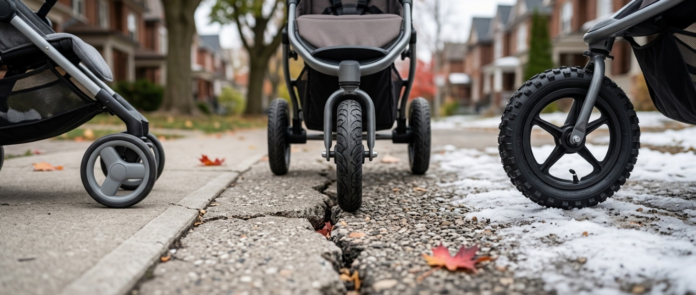
Picture two strollers parked side by side. They have similar canopies, similar weights on paper, and similar price tags, yet one glides over a cracked sidewalk while the other rattles your coffee out of its cup holder.
The difference is usually the stroller wheels. Most parents compare seats, folds, and storage baskets, then discover months later that the wheels shape daily life more than any of those features.
Here is a practical look at the three main wheel types, and how to match one to the route you actually walk.
Why Wheels Deserve a Closer Look
Wheels decide how a stroller feels on rough pavement, how heavy it is when you lift it, and how much upkeep it needs. They also determine how it copes with slush, curbs, and gravel paths.
In Canada, those factors carry extra weight. Heaved sidewalks, long winters, and plenty of stairs and transit steps put wheels to work in ways a spec sheet rarely captures.
Wheels are also one of the hardest features to judge online. Product photos make every tire look rugged and the term all-terrain gets used loosely, so understanding the materials themselves is the most reliable shortcut.
The Three Types of Stroller Wheels
Foam (EVA) wheels: light and flat-proof
Foam stroller wheels are made from dense, closed-cell EVA foam that gives slightly like an air tire, without any air inside. They cannot go flat and need nothing beyond a wipe-down and an occasional drop of lubricant at the axle.
You will find them on many compact and travel strollers, where every bit of weight matters. The ride is softer than hard plastic, though not quite as cushioned as a pneumatic tire over rough ground.
Solid rubber wheels: built to last
Solid rubber stands up to years of pavement, curbs, and grit, which suits families planning to use one stroller for more than one child. Most come with a moulded tread for grip on wet surfaces.
The trade-off is feel. Dense rubber passes more vibration through the frame, so the ride is firmer, and larger rubber wheels add noticeable weight.
Air-filled wheels: the smoothest ride
Air-filled stroller tires work like bicycle tires, with compressed air cushioning every crack and cobblestone. That is why they show up on so many all-terrain and jogging strollers.
That comfort comes with maintenance. Pressure drops over time and needs topping up with a pump, and a sharp stone or piece of glass can cause a puncture.
Match the Wheels to Your Route
City streets, stairs, and transit
If you are folding the stroller onto buses, carrying it up apartment stairs, or squeezing it into a small trunk every day, foam wheels usually win. Lower weight adds up quickly when you lift a stroller several times a day.
Parks, gravel, and uneven paths
Air-filled and larger foam wheels roll over ruts and loose gravel instead of dropping into them. Rubber stays durable on the same surfaces but feels harsher as the ground gets rougher.
Winter sidewalks
The best stroller wheels for snow are large and deeply treaded, whatever the material. Size helps a wheel ride over packed snow instead of ploughing into it, and tread gives it something to grip on icy patches. Small, smooth plastic wheels struggle the most.
If winter walking is a big part of your routine, it is worth comparing all-terrain strollers chosen for snow side by side before you commit.
Three Quick Checks Before You Buy
Look for a valve
A small inflation valve on the rim, just like on a bike tire, means the wheels are air-filled. No valve usually means foam or solid rubber.
Press with your thumb
Pneumatic tires give slightly under pressure, while foam and rubber feel firm. It is a quick way to gauge how much cushioning you will actually get.
Push it, then lift it
Roll the stroller over a doorway threshold or an uneven floor, then lift it as if you were loading a trunk. Specialist stores such as Kido Bébé in Montreal let you push floor models side by side, which makes the difference between wheel types obvious in seconds.
Whichever wheels you choose, confirm the stroller is sold for the Canadian market, where every model must meet Health Canada’s Carriages and Strollers Regulations.
Are Bigger Wheels Always Better?
Not always. Bigger wheels roll over bumps more easily and are the clear choice for snow, but they add weight and widen the folded footprint.
For a family that mostly walks smooth city sidewalks and folds the stroller daily, a mid-sized foam wheel often strikes the better balance. Browsing a complete stroller lineup by size and style can help you narrow the shortlist before you test anything in person.
Start With Where You Walk
Foam keeps things light and maintenance-free, rubber trades some comfort for durability, and air-filled tires give the smoothest ride in exchange for a little pump time. No single type wins everywhere, so the right choice depends on the surfaces you cover most often.
Which matters more to you, a lighter stroller or a smoother ride? Tell us in the comments.