
You’ve seen those wooden rollers and cups all over Instagram, paired with dramatic before-and-after photos. Now you’re wondering whether maderotherapy actually lives up to the hype, or whether it’s just another passing trend.
Good news: this massage technique has been around for a long time and rests on a simple principle. Still, it pays to know what it can do, what it won’t do, and who it isn’t right for. Here are seven things to know before you book your first session.
1. What Exactly Is Maderotherapy?
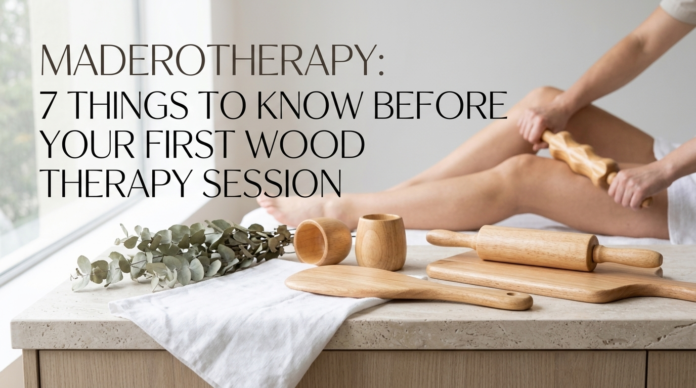
Maderotherapy is a massage technique that uses wooden tools of various shapes: rollers, cups, sculpted boards, and paddles. It’s also known as wood therapy, from the Spanish word madera, meaning wood. The technique is widely associated with Colombia, where it has been popular for decades.
Each tool is designed for a specific area and movement. The practitioner alternates pressure, rolling, and smoothing strokes to work the tissue more deeply than a classic hands-only massage.
2. What It Actually Targets
Maderotherapy is about how the body looks, not how much it weighs. Here are the effects people most often look for.
- The appearance of cellulite: repeated strokes help smooth the skin’s surface, which can soften the orange-peel look. The effect is gradual and depends on the type of cellulite.
- Heavy legs: movements directed toward the heart stimulate circulation. Many people say their legs feel lighter after a session.
- Skin firmness: regular sessions can make the skin look more toned, especially on the stomach and thighs. Results remain modest when skin laxity is significant.
- Relaxation: like any massage, a session helps release muscle tension. For many people, that’s actually the main reason they keep coming back.
3. The Most Commonly Treated Areas
A wood therapy massage is mostly performed on the stomach, hips, thighs, buttocks, arms, and calves. These areas often hold cellulite and water retention, which makes them the natural targets for the technique.
Some practitioners also offer a gentler facial version using smaller tools. The goal there is different: stimulating circulation for a more rested-looking complexion, rather than reshaping.
4. How Many Sessions Will You Need?
A session usually lasts 60 to 90 minutes. For visible changes, a course of six to ten sessions is generally recommended, at a pace of one session per week.
This rhythm gives the body time to respond between appointments, and spaced-out maintenance sessions then help preserve the results. This protocol for maderotherapy in Montreal is a good illustration of a typical course, from the initial assessment to aftercare advice.
5. Maderotherapy Before and After: Realistic Expectations
The maderotherapy before and after photos you see online are often taken right after a session, when the draining effect is most visible. That de-puffing is real, but partly temporary.
More lasting changes in skin texture show up over the full course. They hold up better with a balanced diet, good hydration, and regular physical activity.
Keep one essential point in mind: maderotherapy reshapes the look of your silhouette, but it is not a weight-loss treatment.
6. Is Wood Therapy Safe? Contraindications to Know
When performed properly, wood therapy is safe for most adults. The pressure can be intense, though, and mild bruising or temporary tenderness is possible, especially on fibrous cellulite.
It is not recommended in several situations, including:
- During pregnancy or breastfeeding: the pressure and work on the abdomen aren’t suited to this period. It’s best to wait and talk to your doctor.
- With circulatory or heart conditions: significant varicose veins, a history of blood clots, or a heart condition require medical clearance first. Stimulating circulation can be risky in these cases.
- With certain illnesses: kidney disease, uncontrolled diabetes, an active infection, or cancer under treatment are among the common contraindications. The same goes for any skin lesion on the area to be massaged.
7. How to Prepare for Your Session
Arrive well hydrated: drinking about 1.5 to 2 liters of water a day in the 48 hours beforehand makes it easier to work the tissue. After the session, keep drinking plenty of water, cut back on salt and fatty foods for a day or two, and favor gentle activity like walking.
Maderotherapy also pairs very well with a lymphatic drainage massage, which is gentler and helps reduce water retention and puffiness. Alternating the two works well for people who find the pressure of the wood too intense.
Maderotherapy, Yes, but With Your Eyes Open
Maderotherapy isn’t magic, but it offers a natural, non-surgical way to improve the look of cellulite and get lighter-feeling legs. With realistic expectations and a full course, it can become an effective wellness ritual. If your main concern is actually loss of skin tone, other approaches may be a better fit.
Before you start, check the contraindications and bring all your questions to your initial assessment. Have you tried maderotherapy yet, or are you still on the fence about taking the plunge?