
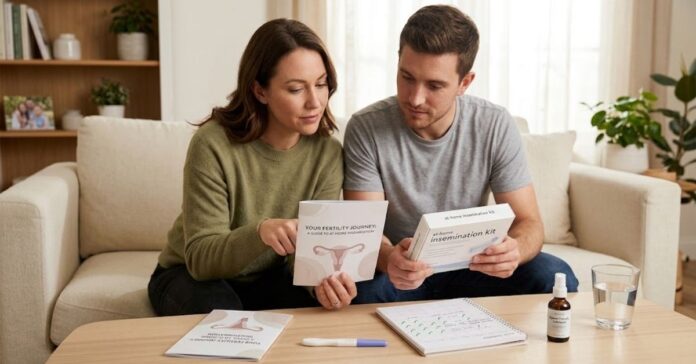
For people who are trying to conceive, understanding the menstrual cycle, ovulation, and available conception options can make the process easier to navigate. Some individuals and couples also explore at-home insemination as an alternative to visiting a fertility clinic for every step.
At-home insemination generally involves introducing sperm into the reproductive tract around the time of ovulation. The approach may be considered by people using donor sperm or couples who want to explore a less clinical conception method.
Ovulation
Ovulation is the release of an egg from an ovary. Because an egg remains viable for a relatively short period after ovulation, timing intercourse or insemination around the fertile window is important when trying to conceive.
The fertile window generally includes the several days leading up to ovulation as well as the day of ovulation. However, the exact timing can vary between individuals and from cycle to cycle.
How to Track the Fertile Window
There are several ways to monitor fertility signs.
Ovulation Predictor Tests
Ovulation predictor kits detect hormonal changes associated with approaching ovulation. A positive result can indicate that ovulation may occur soon, although the timing is not identical for everyone.
Cervical Mucus
Changes in cervical mucus can also provide useful information. Around the fertile period, mucus often becomes clearer, wetter, and more slippery.
Cycle Tracking
Recording menstrual cycles can help identify patterns over time. However, calendar calculations alone may not accurately predict ovulation, particularly when cycles are irregular.
Using several fertility signs together can provide a more complete picture of the fertile window.
What Is ICI?
Intracervical insemination, commonly called ICI, is a form of insemination in which sperm is placed near the cervix.
Some people choose to perform ICI at home using an appropriate insemination kit designed for this purpose. Before using any fertility product, it is important to understand the manufacturer’s instructions and follow appropriate hygiene practices.
At-home insemination is different from medical procedures such as intrauterine insemination (IUI), which is performed by a healthcare professional and involves placing prepared sperm directly into the uterus.
Choosing an At-Home Insemination Kit
People considering home insemination may encounter different types of kits and supplies.
When evaluating an option, consider:
- Clear instructions
- Appropriate medical-use materials
- Packaging and cleanliness
- Ease of use
- Manufacturer information
- Compatibility with the intended insemination method
A product should be used only according to its instructions. If there is uncertainty about whether a particular product or method is appropriate, discussing it with a qualified healthcare professional is a sensible step.
Timing Matters
Timing is one of the most important considerations when attempting conception.
Sperm can survive in the female reproductive tract for several days under favorable conditions, while an egg has a much shorter window of viability after ovulation.
For this reason, insemination is generally planned around the fertile window rather than being based solely on a fixed calendar date.
Preparing for the Process
Good preparation can make an at-home insemination attempt more organized.
Before beginning, make sure all necessary materials are available and that instructions have been read carefully. Wash hands and use clean equipment as recommended by the product manufacturer.
It is also important to avoid using products that may interfere with sperm unless they are specifically designed to be compatible with conception.
Donor Sperm Options
Some individuals and couples use donor sperm when trying to conceive.
Donor sperm may come from a sperm bank or another source, depending on individual circumstances and local requirements. When using donor sperm, factors such as screening, storage, handling, and applicable regulations should be taken seriously.
People using donor sperm should research the legal and medical considerations that apply in their location.
At-Home Insemination vs. Fertility Treatment
At-home insemination is not appropriate for every fertility situation.
Some people may benefit from professional fertility evaluation, particularly when there are known reproductive health concerns or conception has not occurred after an appropriate period of trying.
Medical fertility treatments can provide options that are not available through home insemination. These may include monitored ovulation, IUI, or in vitro fertilization (IVF), depending on the individual’s circumstances.
When to Speak With a Healthcare Professional
Anyone with concerns about fertility can discuss their situation with a qualified healthcare provider.
Professional advice can be especially valuable when menstrual cycles are highly irregular, there are known reproductive conditions, repeated pregnancy loss, or conception has not occurred despite regular attempts.
A healthcare professional can help determine whether further evaluation or treatment may be appropriate.
Maintaining Realistic Expectations
Trying to conceive can take time, even when there are no known fertility problems.
A single unsuccessful insemination attempt does not necessarily indicate a fertility issue. Pregnancy depends on many factors, including timing, sperm quality, egg quality, age, and overall reproductive health.
Keeping accurate cycle records and understanding the fertile window can help people make informed decisions about future attempts.
Final Thoughts
At-home insemination can be an option for some people who want to explore conception outside a clinical setting. Understanding ovulation, identifying the fertile window, choosing appropriate supplies, and following product instructions are important parts of the process.
However, home insemination is not a substitute for professional fertility care when medical evaluation or treatment is needed. Anyone experiencing ongoing difficulties conceiving or having concerns about reproductive health should consider speaking with a qualified healthcare professional.