
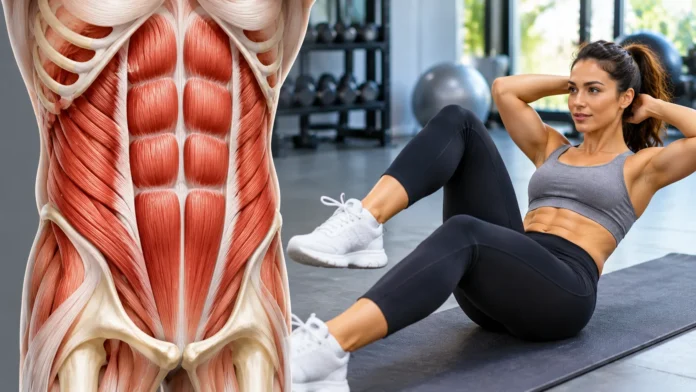
What Are Core Muscles?
Core muscles are a group of muscles surrounding the abdomen, lower back, pelvis, and trunk. They help stabilize the spine, support posture, and control movement during everyday activities. Although many people associate core muscles with visible abdominal muscles, the core includes several deeper structures. These muscles work together to provide stability, coordination, and support throughout the body.
The main core muscles include the rectus abdominis, transverse abdominis, internal and external obliques, multifidus, diaphragm, and pelvic floor muscles. Other muscles around the hips and spine also contribute to core stability. Each muscle performs a different function while supporting coordinated movement. Understanding their anatomy explains why core strength involves much more than traditional abdominal exercises.
Healthy core muscles support activities such as walking, lifting, bending, and maintaining balance. They help transfer forces between the upper and lower body during physical movement. Weakness or poor coordination may affect movement efficiency, although it does not automatically cause pain. Learning about core anatomy and function provides a useful foundation for understanding everyday movement and exercise.
Where Are the Core Muscles Located?
Core muscles are located throughout the central region of the body. They extend from the rib cage toward the pelvis and include structures surrounding the lumbar spine. Some muscles lie close to the skin, while others are positioned deeper within the trunk. This layered arrangement allows the body to perform different movements while maintaining stability.
The abdominal muscles form the front and sides of the core. The rectus abdominis runs vertically along the front of the abdomen, while the obliques occupy the sides. The transverse abdominis forms a deeper abdominal layer. These muscles work with the back muscles to support spinal positioning and manage forces during movement.
Other important core structures include the diaphragm above the abdominal cavity and the pelvic floor muscles below it. Deep spinal muscles provide additional support along the vertebral column. Together, these structures form a coordinated system around the trunk. Their combined activity helps manage breathing, posture, pressure regulation, and movement control.
What Are the Main Core Muscles?
The core includes several muscle groups that contribute to trunk stability and movement. Rectus abdominis helps bend the trunk forward, while the obliques assist with rotation and side bending. Transverse abdominis contributes to abdominal wall tension and pressure management. These muscles coordinate with deeper spinal structures to support various physical activities.
Multifidus is a group of small muscles located along the vertebral column. These muscles contribute to spinal control and help manage movement between vertebrae. The erector spinae muscles also support trunk extension and posture. Their combined activity allows the body to resist unwanted movement while performing everyday tasks.
The diaphragm and pelvic floor muscles contribute to the broader core system through breathing and pressure regulation. Hip muscles, including the gluteals and iliopsoas, also influence pelvic and trunk control. Different definitions of the core may include different supporting muscles. However, effective movement depends on coordination across these interconnected structures.
Rectus Abdominis: Anatomy and Function
Rectus abdominis is a long, paired muscle running vertically along the front of the abdomen. It extends from the pubic region toward the lower sternum and nearby rib cartilages. Connective tissue intersections divide the muscle into visible segments in some people. Its primary role is flexing the trunk and controlling movement between the rib cage and pelvis.
The rectus abdominis becomes active during movements such as curling the upper body forward. It also helps control trunk position when the body resists backward movement. During certain activities, it works with other abdominal muscles to manage pressure and stabilize the torso. Its contribution changes according to posture, movement direction, and physical demands.
Exercises such as curl-ups and controlled abdominal movements can strengthen rectus abdominis. However, visible abdominal definition is not a reliable measure of overall core function. Muscle performance depends on strength, coordination, endurance, and the ability to respond to movement demands. Training should prioritize comfortable function rather than appearance alone.
Transverse Abdominis: The Deep Core Muscle
The transverse abdominis is the deepest major muscle layer of the abdominal wall. Its fibers run mostly horizontally around the abdomen, creating a broad supportive structure. The muscle attaches to connective tissues, the pelvis, and lower rib regions. It contributes to abdominal compression, pressure regulation, and trunk stability during different activities.
Unlike rectus abdominis, the transverse abdominis does not primarily create large bending movements. Instead, it helps manage abdominal wall tension and works with other muscles during breathing and physical effort. Its activation varies according to the task being performed. This coordinated activity helps the body respond to changing loads and positions.
Exercises involving controlled breathing, gentle abdominal bracing, and stable movement can engage this muscle. However, the transverse abdominis does not need to remain tightly contracted throughout the day. Normal movement requires the abdominal muscles to relax and activate as needed. Learning comfortable coordination is more useful than constantly holding the stomach inward.
Internal and External Obliques Explained
The oblique muscles are located along the sides of the abdomen. Each side contains an external oblique layer and a deeper internal oblique layer. Their fibers run in different directions, allowing them to contribute to several trunk movements. These muscles are important for rotation, side bending, abdominal compression, and controlled movement.
External obliques help rotate the trunk toward the opposite side when acting with other muscles. Internal obliques generally contribute to rotation toward the same side. Both muscle groups also assist with side bending and trunk stability. Their coordinated contractions support movements such as turning, reaching, walking, and changing body position.
Oblique muscles become active during rotational exercises and activities that resist unwanted twisting. Controlled side planks, trunk rotations, and carrying movements can challenge their function. Exercise difficulty should match individual ability and comfort. Strong obliques contribute to a coordinated core, but their development should remain part of a balanced strengthening routine.
Multifidus and Deep Spinal Stabilizers
Multifidus muscles are small, deep muscles positioned along the vertebral column. They connect different vertebrae and help control movement between spinal segments. These muscles are particularly important in the lumbar region, where they contribute to local spinal stability. Their activity works alongside larger back and abdominal muscles during movement.
The multifidus muscles respond to changes in posture and loading. They help manage spinal position during standing, bending, walking, and lifting activities. Their function depends on coordination with surrounding tissues rather than isolated contraction alone. Other deep spinal muscles also contribute to controlling small movements throughout the vertebral column.
Exercises involving controlled trunk movement can help develop spinal muscle strength and coordination. Bird dogs and appropriately modified stability exercises are common examples. However, no single exercise exclusively activates multifidus without involving other muscles. Progressive training should emphasize comfortable movement and gradually increasing physical demands.
Erector Spinae and Lower Back Support
The erector spinae is a group of muscles running along both sides of the spine. It includes the iliocostalis, longissimus, and spinalis muscle groups. These muscles help extend the spine and maintain upright posture. Their location allows them to support the trunk during activities involving bending, lifting, and standing.
When both sides contract together, the erector spinae can extend the trunk or resist forward bending. When one side contracts more strongly, the muscles may contribute to side bending. They also control movement during activities that require the torso to remain stable. Their role is especially important when managing loads during everyday tasks.
Strengthening the lower back can involve controlled hip-hinge movements, suitable resistance exercises, and gradual endurance training. However, back discomfort does not always indicate weak spinal muscles. Pain can have several contributing factors that require individual assessment. Balanced training should include abdominal, back, hip, and lower-body muscles rather than focusing on one region.
Diaphragm: The Core Muscle for Breathing
The diaphragm is a dome-shaped skeletal muscle separating the chest cavity from the abdominal cavity. It is the primary muscle responsible for breathing. When it contracts, it moves downward and increases the space within the chest. This movement helps draw air into the lungs while influencing pressure within the abdomen.
The diaphragm also works with abdominal and pelvic floor muscles during pressure regulation. These interactions become important when coughing, lifting, and performing physically demanding movements. Breathing and core stability are therefore closely connected. However, the diaphragm’s primary responsibility remains ventilation, and its activity changes naturally according to breathing demands.
Comfortable breathing exercises can help people become more aware of diaphragm movement. Slow, relaxed breathing may be useful during certain mobility and rehabilitation activities. Avoid forcing excessive abdominal tension or holding the breath unnecessarily. People with respiratory conditions should seek appropriate medical guidance before attempting specialized breathing techniques.
Pelvic Floor Muscles and Core Stability
The pelvic floor muscles form a supportive structure at the bottom of the pelvis. They help support pelvic organs and contribute to bladder and bowel control. These muscles also participate in pressure management alongside the diaphragm and abdominal wall. Their function is important for everyday activities involving movement, breathing, and physical effort.
The pelvic floor must be able to contract and relax appropriately. Excessive tension can create problems just as weakness or poor coordination can. Therefore, strengthening exercises are not automatically the correct solution for every pelvic floor concern. Understanding normal muscle function requires considering both support and the ability to release tension.
Pelvic floor rehabilitation may involve coordination exercises, breathing techniques, strengthening, or relaxation depending on individual needs. A qualified pelvic health professional can help identify suitable strategies when symptoms are present. Persistent pelvic pain, urinary leakage, or difficulty with bladder or bowel control deserves assessment. Appropriate care focuses on function rather than assuming every problem has the same cause.
How Core Muscles Support Posture and Balance
Core muscles contribute to maintaining body position during standing, sitting, and movement. They coordinate with the nervous system and muscles surrounding the hips and shoulders. This cooperation helps manage changes in body position and external forces. However, maintaining posture does not require holding the abdominal muscles tightly throughout the day.
During balance activities, the core helps control trunk movement as weight shifts between the feet. Standing on one leg, walking over uneven surfaces, and reaching sideways require coordinated muscular responses. These actions involve both trunk muscles and lower-body stabilizers. Core function therefore depends on timing and coordination as well as muscular strength.
No single posture is universally correct for every person or activity. Comfortable movement variation is generally more practical than trying to maintain one rigid position continuously. Regular activity, suitable strengthening, and adequate movement breaks can support physical comfort. Core training may improve certain aspects of balance when combined with broader exercise.
How Core Muscles Help With Walking and Running
Walking requires coordinated movements between the trunk, pelvis, hips, and legs. Core muscles help manage trunk position as body weight moves from one leg to the other. They also contribute to controlling rotational forces generated during each step. Their activity supports efficient coordination without requiring conscious abdominal tightening.
Running places greater and more rapidly changing demands on the trunk. Core muscles help control body movement while the arms and legs move repeatedly. Abdominal and back muscles respond to these forces to maintain coordination. However, running performance depends on several factors, including technique, cardiovascular fitness, leg strength, and training experience.
Core strengthening can support general physical preparation for walking and running activities. Exercises that develop trunk control may complement lower-body strengthening and gradual endurance training. Nevertheless, stronger abdominal muscles alone do not guarantee faster running or prevent every injury. Balanced fitness programs should address the demands of the entire body.
Why Core Muscles Matter During Lifting
Core muscles help transfer force between the upper and lower body during lifting activities. They contribute to trunk stability while the hips, legs, and arms generate movement. This coordination is important when picking up objects, carrying bags, or performing resistance exercises. Appropriate muscle activation helps the body manage different loading demands.
During lifting, abdominal and spinal muscles work together to control trunk position. Breathing patterns and abdominal pressure also influence how loads are managed. The appropriate strategy depends on the task, load, and individual ability. A controlled movement approach is generally more useful than trying to keep every trunk muscle maximally contracted.
Learning suitable lifting techniques can improve confidence and movement efficiency. Start with manageable loads and gradually develop strength through appropriate exercise. Avoid sudden increases in lifting demands, particularly when recovering from an injury. People with persistent pain or relevant medical conditions may benefit from individualized guidance before progressing to heavier activities.
Signs of Weak or Poorly Coordinated Core Muscles
Core weakness can affect performance during activities that require trunk strength and endurance. Some people may notice difficulty maintaining control during challenging exercises or carrying loads. However, these experiences do not automatically indicate a specific muscle problem. Fatigue, unfamiliar movement, and overall fitness can also influence performance.
Poor coordination may appear when movement becomes difficult to control during demanding tasks. For example, someone may struggle to maintain a comfortable trunk position during a balance exercise. This does not necessarily mean the core is damaged or dysfunctional. Movement abilities vary naturally, and training can help improve performance over time.
Back pain is sometimes attributed to weak core muscles, but the relationship is more complicated. Pain can involve physical, psychological, and environmental factors. Many people with back discomfort have adequate muscle strength. Persistent symptoms should be evaluated appropriately rather than assuming that abdominal strengthening alone will resolve the problem.
Best Beginner Exercises for Core Muscles
Beginner core exercises should develop comfortable movement control and appropriate strength without unnecessary strain. Simple options include modified dead bugs, bird dogs, and gentle abdominal bracing. These movements engage several muscle groups while allowing gradual progression. Beginners can focus on controlled repetitions rather than attempting demanding routines immediately.
A modified dead bug involves lying on the back with the knees bent and moving one limb at a time while keeping the movement comfortable. Bird dogs involve controlled opposite arm and leg movements from a hands-and-knees position. Both exercises can challenge trunk stability. Their difficulty can be adjusted by changing the movement range or support.
Consistency matters more than performing the most difficult exercise available. Begin with manageable movements and allow adequate recovery between demanding sessions. Stop or modify exercises that cause sharp pain or unusual symptoms. A balanced routine can include core training alongside walking, mobility activities, and general strength development.
Planks and Side Planks for Core Strength
Planks are commonly used to challenge the abdominal and trunk muscles through an isometric contraction. During a plank, the body maintains a relatively stable position while several muscles generate force. The exercise can develop endurance and coordination. However, holding a plank for an extremely long time is not necessary for effective training.
A modified plank can be performed with the knees supported or the hands resting on an elevated surface. These variations reduce the difficulty while allowing controlled muscle activation. As strength improves, the exercise can be progressed gradually. Breathing comfortably during the hold helps avoid unnecessary tension or excessive breath-holding.
Side planks place greater emphasis on muscles that resist sideways trunk movement. They involve the obliques and other stabilizing muscles around the hips and shoulders. Beginners can use bent-knee variations when appropriate. Selecting a manageable difficulty helps build strength without compromising comfortable movement or exercise technique.
Dead Bugs and Bird Dogs for Core Coordination
Dead bugs are exercises that challenge trunk stability while the arms and legs move. They are commonly performed while lying on the back with the limbs positioned above the body. Controlled movement helps the abdominal muscles manage changes in load. The exercise can be modified to suit different strength and coordination levels.
Bird dogs challenge stability from a hands-and-knees position. Extending an arm or leg changes the body’s balance demands and encourages coordinated muscular control. The movement involves the abdominal muscles, spinal muscles, and muscles around the hips. Performing smaller movements can make the exercise more manageable for beginners.
Both exercises are useful because they combine controlled movement with trunk stability. However, neither is essential for every fitness program. Other movements can provide similar benefits depending on personal preferences and physical abilities. The most practical approach is to choose exercises that are comfortable, appropriately challenging, and easy to perform consistently.
Common Core Training Mistakes to Avoid
One common mistake is focusing exclusively on abdominal crunches while ignoring other trunk muscles. The core includes muscles that support rotation, extension, breathing, and pelvic control. Training only one movement pattern may leave other abilities less developed. A balanced routine includes different exercises that challenge the trunk in several ways.
Another mistake involves progressing exercise difficulty too quickly. Challenging movements can create unnecessary strain when strength and coordination are still developing. Beginners may benefit from modified exercises and gradual increases in resistance or complexity. Physical progress does not require exercising through sharp pain, severe fatigue, or persistent discomfort.
Some people also believe that core muscles must remain tightly engaged throughout daily activities. In reality, normal movement requires muscles to activate and relax according to changing demands. Constant abdominal tightening may interfere with comfortable breathing and movement. Learning flexible, task-appropriate muscle control is more useful than maintaining permanent tension.
How to Maintain Healthy Core Muscles
Maintaining core function involves regular physical activity and suitable strength development. Walking, recreational sports, and everyday movement all involve trunk muscles to varying degrees. Dedicated core exercises can complement these activities when appropriate. The most useful routine is one that matches individual abilities and can be maintained comfortably over time.
A balanced program should address abdominal strength, spinal control, hip movement, and overall physical fitness. Exercises can become more challenging as strength and confidence improve. Rest and recovery remain important because muscles adapt between training sessions. Varying activities also helps develop different movement abilities rather than repeating only one exercise.
Core health is not determined by visible abdominal definition or the ability to hold a difficult position. Functional strength involves performing everyday tasks comfortably and responding to changing physical demands. Persistent pain or unusual symptoms deserve professional evaluation. With consistent movement and appropriate training, core muscles can support an active and practical lifestyle.
Conclusion
Core muscles form an interconnected system surrounding the abdomen, spine, and pelvis. Important components include rectus abdominis, transverse abdominis, obliques, multifidus, diaphragm, and pelvic floor muscles. Together, they support posture, breathing, stability, and movement. Understanding their anatomy provides a clearer picture of how the body’s central muscles contribute to everyday function.
Core strength involves more than performing abdominal exercises or developing visible muscle definition. Effective trunk function depends on strength, coordination, endurance, and comfortable movement control. Exercises such as modified planks, dead bugs, and bird dogs can support these abilities. However, training should reflect individual needs rather than follow a single approach for everyone.
Maintaining healthy core muscles requires regular activity, gradual strengthening, and appropriate recovery. A balanced routine that includes trunk, hip, and lower-body movements can support overall physical performance. Persistent discomfort should be assessed rather than automatically attributed to weak abdominal muscles. Understanding core anatomy and function helps people make informed decisions about movement, exercise, and musculoskeletal health.
Frequently Asked Questions
What are the main core muscles?
The main core muscles include rectus abdominis, transverse abdominis, internal and external obliques, multifidus, diaphragm, and pelvic floor muscles. Other back and hip muscles also contribute to trunk stability.
What is the main function of core muscles?
Core muscles help stabilize the trunk, control movement, manage abdominal pressure, and transfer forces between the upper and lower body. They also contribute to posture, balance, breathing, and everyday physical activities.
What exercises strengthen core muscles?
Planks, side planks, dead bugs, bird dogs, and suitable resistance exercises can develop core strength and coordination. Beginners should choose manageable variations and increase difficulty gradually as their abilities improve.
Can weak core muscles cause back pain?
Core weakness may contribute to movement difficulties in some people, but back pain has many possible causes. Strengthening exercises may help certain individuals, although persistent symptoms require appropriate assessment.
How often should you train your core muscles?
Core exercises can be included in a balanced strength-training routine several times per week, depending on intensity and recovery needs. Beginners should start gradually and allow sufficient recovery between demanding sessions.