
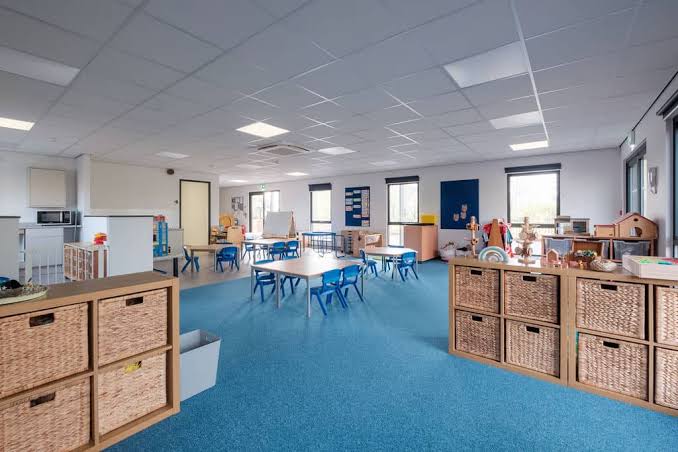
Schools need learning spaces that support different instructional requirements and student needs. Mobile classrooms provide additional space that schools can customize for special education programs. Their flexible designs accommodate accessibility needs, focused instruction, technology, and other classroom requirements. Here are a few ways to design portable classrooms for special needs education:
Design Accessible Entrances
Students have different mobility needs, so classroom access needs to accommodate those differences. Portable classrooms can include ramps and accessible landings for easier entry. Wider doorways give wheelchair users more room to enter and move between areas.
The classroom layout also affects how easily students move throughout the space. Wider aisles provide additional clearance for mobility devices, while open areas reduce obstacles between instructional zones. When these features are incorporated into the floor plan, students and teachers have more direct paths between learning areas.
Accessible restrooms provide another factor when designing spaces for special education programs. Their location and configuration should accommodate students with different mobility and accessibility needs, while convenient placement limits unnecessary travel through the building. School management teams can share these requirements with modular space providers, who then recommend appropriate layout changes and features for the planned classroom space.
Configure Flexible Layouts
Special education programs involve different activities and instructional approaches throughout the school day. A flexible classroom accommodates individual instruction, group activities, and focused learning without requiring every function to occur in the same setting. Breakout rooms provide separation for activities that require reduced distractions, while open areas support shared instruction and teacher interaction. The arrangement should reflect how each space will be used, since individual instruction often requires different spatial requirements than collaborative activities. Modular layouts give schools greater control over room configurations, allowing spaces to be organized around specific teaching methods and program requirements.
Control Classroom Acoustics
Noise levels affect how clearly students hear instruction and communicate during lessons. Portable classrooms incorporate construction features that help limit outside noise, while acoustic treatments address sounds generated within the space. Soundproofing measures provide further separation when nearby activities create distractions, which is particularly relevant in settings that require focused instruction.
Acoustic treatments should reflect the way each classroom is used. A modular space provider can incorporate features such as acoustic panels and ceiling treatments, while sound system placement also influences how evenly audio reaches students. These design choices help create a more controlled acoustic environment for different instructional activities. Sound management also supports activities that require greater privacy, including counseling and individual sessions. Mobile classrooms provide schools with a dedicated setting for these services without requiring permanent construction. Their relocatable design allows the space to be moved elsewhere on campus when program needs or facility requirements change.
Integrate Learning Technology
Technology gives special education teachers additional tools for presenting information and adapting instruction to different learning needs. Interactive displays support visual and hands-on activities, while networked devices connect classroom technology for digital lessons and communication. These tools also provide students with different ways to participate, which helps teachers accommodate varied instructional approaches and abilities.
Technology placement should align with the needs of students who use the classroom. Equipment requires accessible locations and sufficient surrounding space; the overall layout should leave clear paths for movement and mobility devices. A thoughtful arrangement keeps technology within reach without interfering with individual instruction, group activities, or other classroom functions.
Mobile classrooms also provide adaptable space for technology-based instruction in special education programs. Their layouts support small-group activities, individual work, and presentations, while designated technology areas keep equipment organized. Schools can work with modular space providers to incorporate accessible technology features that correspond with their instructional needs.
Customize Learning Spaces
Special education classrooms have distinct requirements, so customization helps schools address the needs of each program. Lighting, storage, and room layouts influence how students use the space, while additional areas support individual instruction or group activities. Some programs also require dedicated space for specialized learning equipment, and the classroom configuration should account for these functions without restricting movement. Custom modular designs give schools greater flexibility to organize instructional areas around specific program requirements. Accessible features and thoughtful layouts create an inclusive environment where students have appropriate space to move, learn, and participate.
Design Portable Classrooms
Special education programs benefit from classroom designs that address accessibility, sound control, technology, and instructional needs. Flexible layouts give teachers room to support different activities, while customized features address specific student goals. Contact a modular building provider to discuss portable classrooms suited to your special education program.