
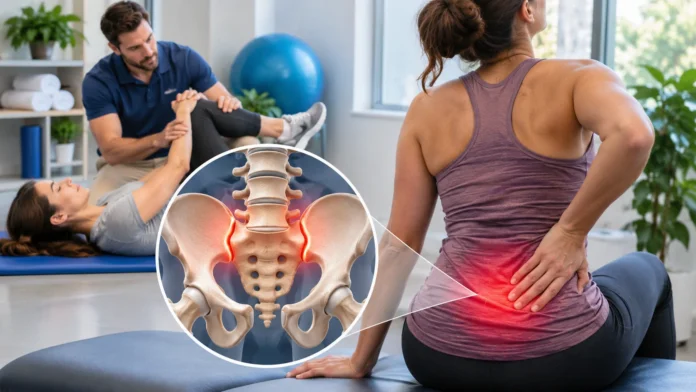
Sacroiliac joint pain relief often involves gentle movement, physical therapy, activity adjustments, and treatments that reduce discomfort around the lower back and pelvis. The sacroiliac joints connect the lower spine to the pelvic bones and help transfer weight between the upper body and legs. When these joints become irritated, people may experience pain in the lower back, buttocks, or surrounding areas.
Understanding the common causes of sacroiliac joint pain can help you recognize symptoms and explore appropriate treatment options. Discomfort may develop after an injury, during pregnancy, or alongside certain inflammatory conditions. This guide explains SI joint pain symptoms, possible causes, safe home relief strategies, recommended exercises, and when professional medical care is necessary.
What Is Sacroiliac Joint Pain?
Sacroiliac joint pain occurs when one or both sacroiliac joints become a source of discomfort. These joints connect the sacrum, a triangular bone at the bottom of the spine, to the iliac bones of the pelvis. Their primary functions include supporting weight transfer and providing stability during standing, walking, and other everyday activities.
Unlike highly mobile joints such as the shoulders or knees, the sacroiliac joints allow relatively small amounts of movement. Strong ligaments and surrounding muscles help maintain stability during physical activity. However, irritation, inflammation, or changes in the way forces pass through the pelvic region may contribute to discomfort around these joints.
Sacroiliac joint pain is sometimes called SI joint dysfunction or sacroiliitis, although these terms do not always describe the same condition. Sacroiliitis specifically refers to inflammation of a sacroiliac joint. Because several other conditions can produce similar symptoms, identifying the actual source of pain requires an appropriate medical assessment.
Where Is Sacroiliac Joint Pain Located?
Sacroiliac joint pain is commonly felt on one side of the lower back or near the upper buttock. Some people describe the discomfort as a deep ache close to the dimples above the buttocks. The pain may remain in one location or spread into nearby areas depending on the underlying condition.
In some cases, discomfort extends into the hip, groin, or upper thigh. Certain individuals notice symptoms when climbing stairs, standing on one leg, or changing positions after sitting. However, these patterns are not unique to sacroiliac joint problems and may also occur with lumbar spine or hip conditions.
Pain that travels into the leg does not automatically mean the sacroiliac joint is responsible. Nerve irritation, disc problems, and other musculoskeletal disorders can produce overlapping symptoms. A clinician can examine the location of discomfort, movement patterns, and other findings to help determine which structures may be involved.
Common Causes of Sacroiliac Joint Pain
Sacroiliac joint discomfort can develop after injuries that place unusual forces through the pelvis. Falls, sports-related impacts, and other physical trauma may irritate surrounding tissues. Repeated loading or sudden changes in physical activity can also contribute to pain, although the relationship between movement and symptoms varies among individuals.
Pregnancy-related changes can influence the tissues supporting the pelvic region and may contribute to pelvic girdle pain. Changes in body mechanics and loading can increase discomfort during everyday movement. However, not all pregnancy-related lower back pain originates from the sacroiliac joints, so assessment is important when symptoms become persistent or limiting.
Inflammatory conditions, including certain forms of arthritis, can affect the sacroiliac joints. Conditions such as axial spondyloarthritis may produce inflammation accompanied by prolonged morning stiffness or other symptoms. Infection is a rare but serious cause, particularly when pain occurs alongside fever or signs of systemic illness.
Symptoms of Sacroiliac Joint Dysfunction
The most common symptom associated with SI joint dysfunction is pain around the lower back and buttock region. Some people experience discomfort primarily on one side, although symptoms can affect both sides. Pain may become more noticeable during activities that transfer weight through the pelvis or require repeated position changes.
Standing for extended periods, walking uphill, or turning over in bed may aggravate symptoms in certain individuals. Others report discomfort after prolonged sitting or when rising from a chair. These patterns provide useful information during an examination, but they cannot confirm an SI joint problem without considering other possible causes.
Symptoms may range from mild discomfort to pain that interferes with everyday tasks. Persistent stiffness, reduced activity tolerance, or difficulty finding comfortable positions can affect sleep and daily routines. Sudden weakness, significant numbness, or changes in bladder or bowel control require urgent medical evaluation rather than being treated as ordinary SI joint symptoms.
How Doctors Diagnose Sacroiliac Joint Pain
Diagnosing sacroiliac joint pain usually begins with a medical history and physical examination. A healthcare professional may ask about the location of discomfort, recent injuries, daily activities, and symptoms that suggest inflammatory disease. This information helps distinguish possible SI joint problems from conditions affecting the lower back or hip.
During the examination, the clinician may use several gentle physical tests that place controlled stress on the pelvic region. A combination of findings can increase or decrease suspicion that the sacroiliac joint contributes to the pain. However, no single movement test can reliably establish the diagnosis in every person.
Imaging tests may be recommended when a clinician suspects arthritis, injury, infection, or another condition requiring further investigation. X-rays and MRI scans can help evaluate certain structural or inflammatory changes, but imaging does not always identify the cause of mechanical pain. In selected cases, a carefully performed diagnostic injection may help clarify whether the joint contributes to symptoms.
Sacroiliac Joint Pain Relief at Home
Initial sacroiliac joint pain relief may involve temporarily reducing activities that clearly aggravate symptoms. This does not usually mean remaining in bed or avoiding all movement. Gentle daily activity within a comfortable range can help prevent unnecessary stiffness while allowing irritated tissues to settle.
Applying a cold pack wrapped in a towel may help with discomfort following a recent minor strain. Some people prefer gentle warmth for muscle tightness or ongoing stiffness. Try a comfortable temperature for a short period, protect your skin, and avoid direct exposure to extreme heat or cold.
Changing positions regularly may also improve comfort during prolonged sitting or standing. Use a supportive chair, keep frequently used items within easy reach, and avoid movements that repeatedly trigger sharp pain. Home strategies can help manage mild symptoms, but persistent or worsening discomfort deserves evaluation by a healthcare professional.
Gentle Exercises for Sacroiliac Joint Pain Relief
Gentle exercises may support sacroiliac joint pain relief by improving movement confidence and maintaining comfortable activity. The most suitable exercises depend on the underlying cause and individual symptoms. Begin with slow movements that do not increase pain, and avoid assuming that every exercise recommended online is appropriate for your condition.
A comfortable pelvic tilt can be an introductory movement for some people. While lying on your back with your knees bent, gently change the position of your pelvis within a small, pain-free range. Keep breathing normally and stop if the movement increases discomfort or causes symptoms to spread.
Other options may include gentle walking or simple exercises recommended by a physical therapist. Some people benefit from gradually strengthening muscles around the hips and trunk, but the exercises and progression should be individualized. If you have recent trauma, inflammatory disease, pregnancy-related pain, or significant symptoms, seek professional guidance before starting a new exercise routine.
Stretches That May Help With SI Joint Discomfort
Gentle stretching may reduce surrounding muscle tightness when that tightness contributes to discomfort. The hip muscles, gluteal region, and nearby tissues can influence how movement feels around the pelvis. However, stretching cannot reliably correct every form of SI joint pain and may aggravate symptoms when performed too forcefully.
A comfortable seated hip stretch may be suitable for some individuals, depending on their mobility and symptoms. Any movement should remain gentle and should not involve pushing through pain. If a stretch creates sharp discomfort in the buttock, groin, lower back, or leg, stop rather than increasing the intensity.
It is also important to avoid aggressive twisting or attempting to force the sacroiliac joint into a particular position. The idea that every painful SI joint is simply out of alignment is an oversimplification. A physical therapist can help determine whether stretching, strengthening, or another approach is more appropriate for your symptoms.
How Physical Therapy Helps Sacroiliac Joint Pain
Physical therapy is commonly recommended for people experiencing persistent mechanical pain around the sacroiliac region. A physical therapist can evaluate movement patterns, strength, mobility, and activities that aggravate symptoms. This assessment helps guide an individualized treatment plan rather than applying the same exercise program to everyone.
Treatment may include gradual strengthening of the hip and trunk muscles, movement retraining, and strategies for returning to normal activities. Certain people also benefit from learning more comfortable ways to lift, sit, or change positions. The goal is to improve function and confidence while avoiding unnecessary irritation.
Progress often varies according to the underlying condition, symptom duration, and individual circumstances. Some people improve with a relatively straightforward rehabilitation program, while others need additional medical assessment. Working with a qualified professional can help adapt exercises when symptoms change or initial strategies do not provide sufficient relief.
Medications and Medical Treatments for SI Joint Pain
Over-the-counter pain relievers are sometimes used to manage discomfort associated with sacroiliac joint problems. However, medications such as nonsteroidal anti-inflammatory drugs are not appropriate for everyone because of possible side effects and interactions. A healthcare professional or pharmacist can help determine whether a particular medication is suitable.
For persistent symptoms, clinicians may consider targeted treatments based on the suspected pain source. Image-guided injections containing local anesthetic, sometimes combined with corticosteroid medication, may be considered in selected cases. These procedures have limitations and potential risks, and the degree or duration of relief varies.
People with inflammatory sacroiliitis may require treatment directed at the underlying inflammatory condition rather than general pain management alone. Other procedures are generally reserved for carefully selected situations after appropriate evaluation and conservative care. Treatment decisions should account for diagnosis, potential benefits, risks, and patient preferences.
Best Sleeping Positions for Sacroiliac Joint Pain
Sleeping with sacroiliac joint pain can be difficult when certain positions place uncomfortable pressure on the pelvis. Some people find side sleeping more comfortable with a pillow between the knees. This arrangement may help maintain a relaxed position through the hips and lower back, although individual preferences vary.
Back sleeping may also be comfortable when a pillow is placed beneath the knees. This can reduce strain for some individuals and make it easier to maintain a supported resting position. A suitable mattress should provide enough comfort without forcing the body into a painful posture.
There is no single sleeping position that works for everyone with SI joint pain. If lying on one side increases discomfort, try another supported position rather than forcing yourself to remain still. Persistent nighttime pain, especially when accompanied by fever, unexplained illness, or significant stiffness, should be discussed with a healthcare professional.
Everyday Habits That May Reduce SI Joint Pain
Daily movement habits can influence how frequently discomfort occurs around the sacroiliac region. Alternating between sitting, standing, and gentle walking may help prevent prolonged stiffness. You can also adjust demanding activities temporarily while gradually returning to comfortable routines as symptoms improve.
When lifting household objects, keep the item reasonably close to your body and avoid sudden twisting movements that provoke pain. Use appropriate assistance for loads that are difficult to manage. The objective is not to maintain a rigid posture throughout the day but to move comfortably and avoid repeatedly aggravating symptoms.
Some individuals find that pacing physically demanding activities improves their ability to participate in everyday life. Taking reasonable breaks and increasing activity gradually may be more helpful than alternating between complete rest and excessive exertion. Long-term management often focuses on maintaining function rather than avoiding normal movement altogether.
Can an SI Joint Belt Help Relieve Pain?
A sacroiliac belt is a supportive device worn around the pelvic region. It is sometimes recommended for certain forms of pelvic girdle pain, including discomfort associated with pregnancy. The belt applies external support that some users find helpful during walking or other daily activities.
However, an SI joint belt is not appropriate for every person experiencing lower back or buttock pain. Its effectiveness depends on the underlying problem, fit, and individual response. A belt should not be considered proof of a particular diagnosis or a replacement for appropriate rehabilitation and medical care.
If a clinician recommends a support belt, follow their instructions regarding placement and use. Poor fit or excessive pressure may create discomfort, especially around sensitive tissues. The device should support comfortable activity rather than encourage prolonged dependence or restrict normal movement unnecessarily.
When to See a Doctor for Sacroiliac Joint Pain
Medical evaluation is appropriate when lower back or pelvic pain persists, repeatedly returns, or interferes with walking, sleeping, or daily activities. A clinician can assess whether the symptoms are consistent with SI joint pain or another condition. Early assessment may also help identify inflammatory disorders that require specific treatment.
Seek urgent medical care for new bladder or bowel control problems, numbness around the groin, or significant new leg weakness. Severe pain after a major injury also needs prompt assessment. These symptoms may indicate a serious condition involving the spine or surrounding structures rather than a routine sacroiliac joint problem.
Fever combined with significant back or pelvic pain, especially when accompanied by feeling unwell, also warrants prompt medical attention. Unexplained weight loss, a history of cancer, or persistent worsening night pain should be discussed with a clinician. Recognizing these warning signs helps ensure that potentially serious conditions are not overlooked.
How Long Does Sacroiliac Joint Pain Last?
The duration of sacroiliac joint pain depends on its underlying cause and the individual’s response to treatment. Mild mechanical irritation may improve over days or weeks with appropriate activity changes and supportive care. Other conditions can produce recurring or persistent symptoms requiring a longer management plan.
Inflammatory conditions may follow a different course from discomfort related to a minor strain. Some people experience periods of improvement followed by symptom flare-ups. This variation is one reason that general recovery timelines should not replace an individualized medical assessment.
If symptoms are not improving, it is useful to review the diagnosis and treatment approach with a qualified professional. Continuing painful exercises or relying on repeated home remedies may not address the underlying problem. A targeted plan can help improve daily function while identifying whether further investigation is necessary.
Conclusion
Sacroiliac joint pain relief often begins with understanding the possible causes and recognizing how symptoms affect daily movement. Discomfort around the lower back and buttocks can originate from the SI joints, but other spinal, hip, and muscular conditions may produce similar pain. An accurate assessment helps guide appropriate treatment.
Gentle activity, comfortable positioning, physical therapy, and selected medical treatments can help manage sacroiliac joint discomfort. The right approach depends on whether symptoms arise from mechanical irritation, inflammation, injury, or another condition. Avoid forcing painful stretches or relying on unsupported claims about realigning the pelvis.
If discomfort persists, becomes more severe, or occurs alongside concerning symptoms, seek medical advice. A qualified healthcare professional can identify possible causes and recommend suitable treatment. With appropriate evaluation and individualized care, many people can improve comfort, maintain mobility, and return to their usual activities.
Frequently Asked Questions
What Is the Fastest Way to Relieve Sacroiliac Joint Pain?
For mild discomfort, temporarily reducing aggravating activities, using a wrapped cold or warm pack, and maintaining gentle movement may help. Persistent pain requires assessment because the best relief depends on its cause.
Is Walking Good for Sacroiliac Joint Pain?
Gentle walking may help maintain mobility and reduce stiffness when it does not worsen symptoms. Start with a comfortable amount, adjust according to your response, and seek professional guidance if walking increases pain.
What Causes Sacroiliac Joint Pain to Flare Up?
Symptoms may worsen after prolonged sitting, standing, lifting, or other movements that irritate the affected region. Inflammatory conditions can also cause flare-ups, so recurring symptoms may require medical evaluation.
What Should You Avoid With Sacroiliac Joint Pain?
Avoid forcing painful stretches, aggressive twisting, or continuing activities that significantly increase discomfort. Complete bed rest is generally not recommended for uncomplicated mechanical pain, and activity adjustments should match individual symptoms.
Can Sacroiliac Joint Pain Go Away on Its Own?
Mild discomfort may improve with time and appropriate activity adjustments. However, persistent or recurring symptoms may require physical therapy or medical treatment, especially when an underlying inflammatory condition is involved.